
In many clinics, the most important education moment happens after the practitioner has already done the hard work. The visit is complete. The supplement list has been discussed. Nutrition guidance has been reviewed. The patient nods along. Then the patient leaves and has to remember what changed, what to take, what to avoid, and when to follow up.
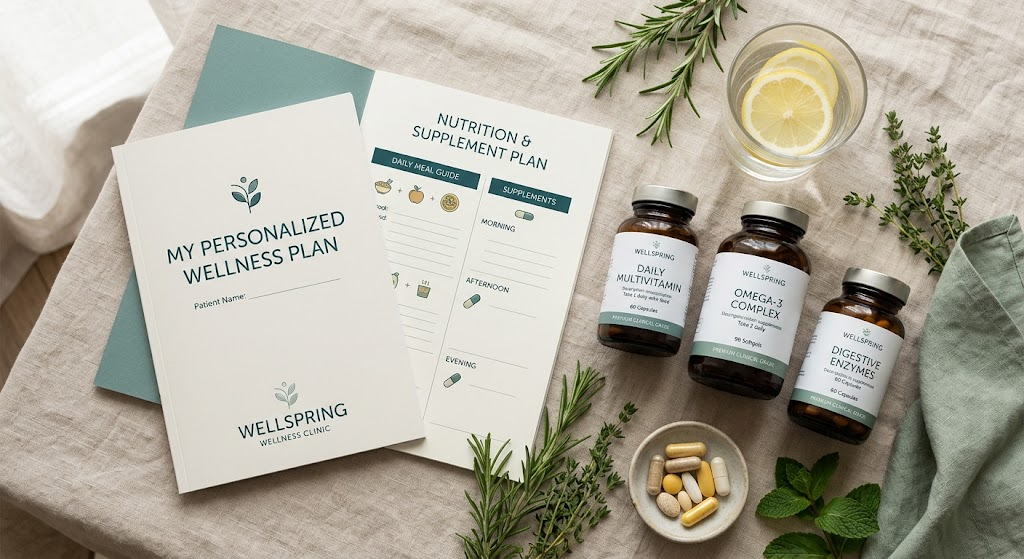
That is why clinic-branded patient handouts matter. They are not decoration. They are a bridge between the clinical conversation and the patient's real week. A good handout gives the patient a clear reference, gives the clinic a consistent education format, and keeps the plan connected to the practice that reviewed it.
The handout should not be an afterthought
A common workflow problem is that the practitioner creates an internal plan and then quickly assembles a patient version at the end. That rush creates gaps. The patient may receive a supplement list without context, a long paragraph without priority, or a generic document that looks disconnected from the clinic's actual care experience.
The better workflow is to design the patient handout as part of the protocol process. In aiVitaPlan Clinical, the patient handout is a dedicated output generated alongside the full clinical analysis — not assembled manually after the fact. The practitioner enters patient data (conditions, current medications, allergies, lab values such as Vitamin D ng/mL), clicks "Generate Full Analysis," and receives a structured protocol organized by category: Vitamins, Mushrooms, Teas, Oils, Topicals, Homeopathy, and Gut Health. The Patient Handout is one of those outputs. It is available for review immediately after generation, so the practitioner can inspect the clinical recommendations and then decide what the patient takes home.
Branding creates continuity
Branding is often treated as a marketing concern, but in clinical education it has a practical role. A handout with the clinic name, contact details, and consistent visual language feels like it belongs to the care team. The patient is less likely to confuse it with a random supplement handout, a product insert, or a generic internet printout.
Brand continuity also helps multi-provider clinics. When every practitioner produces patient education in a different format, the practice can feel inconsistent. A shared branded handout format makes the clinic look organized and gives staff a predictable document to reference during follow-up calls.
Selectable sections protect clarity
Not every generated protocol section belongs in every patient handout. A practitioner may review vitamins internally but choose not to include every botanical category. Another clinic may use gut health and meal planning heavily but avoid other categories for a particular patient. If the software forces all sections into the final PDF, the handout becomes harder to use.
aiVitaPlan includes report settings with selectable sections. The clinic can include Vitamins, Mushrooms, Teas, Essential Oils, Topicals, Homeopathy, and Gut Health according to the practitioner's review of each category. For example, a practitioner treating a patient with IBD and fatigue may want to include the Gut Health and Vitamins sections but omit Topicals entirely. Section-level control keeps the handout aligned with the actual plan rather than the full universe of generated content, and it prevents a busy patient from receiving a ten-page document when the relevant guidance fits on two pages.
PDF and print still matter
Digital portals are useful, but physical and PDF handouts still matter in clinics. Some patients want a printed plan. Some want a PDF they can keep with lab records. Some clinics use a chairside review process where the practitioner walks through the handout before the patient leaves. A workflow that supports both printing and PDF export gives the clinic flexibility.
aiVitaPlan includes handout generation, print, and PDF export built into the same screen as the clinical analysis. The practitioner reviews the protocol, selects the sections to include, and exports the branded document without leaving the tool or rebuilding the content in a separate application. The PDF carries the clinic identity — name, contact, and consistent formatting — so patients can file it alongside lab reports or reference it when they are standing in the supplement aisle and cannot remember whether 2,000 IU or 5,000 IU was recommended.
Handouts help follow-up visits
Follow-up is easier when the clinic and patient are looking at the same plan. The patient can reference what was recommended, and the practitioner can ask what was followed, what was confusing, and what should change. A critical interaction check is one element that deserves specific follow-up attention. For example, if the generated protocol flagged an elevated bleeding risk from high-dose Omega-3 combined with a patient's existing Klonopin prescription, the follow-up visit is where the practitioner confirms whether the patient understood that flag and whether they discussed it with their prescriber. A clearly formatted handout that surfaces the interaction rationale — not just a dosage number — gives the patient the right language to have that conversation.
aiVitaPlan includes scan history so practitioners can revisit prior generated analyses and patient notes at the next visit. Supplement and nutrition planning is rarely a one-visit process. The handout should support the next conversation, not just conclude the current one.
Staff should be able to recognize the document instantly
A branded handout also helps the front desk, care coordinators, and assistants. When a patient calls with a question, staff can identify the document, understand which sections were included, and route the question appropriately. A generic document makes that harder. A consistent clinic format reduces friction because everyone knows what the patient is looking at.
That is a small operational detail, but it matters. Patient education does not live only between the practitioner and the patient. It often becomes part of scheduling, follow-up, refill conversations, and future visits.
What a strong handout workflow includes
A strong patient handout workflow requires: practitioner review before patient export; section-level control so only the relevant protocol categories are included; clinic identity on every page; plain-language summaries of each recommendation alongside its rationale; drug-interaction flags the patient needs to know about; and a repeatable format so staff always know what they are looking at. The handout should make the plan easier to understand without dropping the nuance the practitioner considered when reviewing the dosage, rationale, and interaction check for each item.
For clinics evaluating aiVitaPlan, the handout workflow is where the product's clinical depth translates into patient value. The AI Scribe and generation engine handle the heavy lifting during the visit. The branded handout and Doctor/Provider PDF are what the clinic and the patient carry forward. That document should be clear, branded, and under the practitioner's control — not a raw AI dump.
To see how the handout fits into the full scribe workflow, read the functional medicine scribe guide. To compare plan access, visit aiVitaPlan pricing.